

Recently a minister asked me to lead an adult faith formation session on spiritual practices in the here and now. She envisioned a focus on how we stay spiritually rooted during ordinary times. And she meant it both as ordinary as well as Ordinary Time in the Christian liturgical calendar.
We generally think of commonplace, typical, or normal as synonyms for ordinary. The word has always felt flat to me. No peaks, no variations, just plain and monotonous. This does reveal something about who I am. In my 20’s my dad described me as someone who, when faced with something new, tends to dive in rather than stay analytical, measured, and cautious. Not adrenaline-junkie diving-out-of-airplanes, but someone who, at an edge, a boundary, a threshold, tends to keep going.
For someone like that, to be called ordinary, to live an ordinary life, would be anathema. But as I move closer to turning 60, I find myself longing for ordinary. For safety. For common sense. For some predictability.
If I’m honest, I think it’s the exhaustion. Not tired from one thing. Tired from years of this country lurching from one upheaval to the next with no room to catch a breath in between. Francis Weller has a name for it: he calls this season we are in the absence of the ordinary itself. It’s not a season we’re passing through in a somewhat predictable pattern, but rather the very rhythms we have relied on in our shared communal life are broken. When I read that, I recognized what my longing actually was. Not nostalgia. Rather, my body, asking for the sequence back. For things to come in their turn again.
And this is where Ordinary Time (capital O) comes back in. In the Christian liturgical calendar, Ordinary Time is everything outside Advent, Christmas, Lent, and Easter: the stretch after the Baptism of Jesus until Ash Wednesday, and the longer stretch from Pentecost to the First Sunday of Advent. We are in this Long Green Season right now.
It’s easy to hear ordinary and think no big deal, nothing happening. But the word’s root is Latin ordo — row, rank, order — the same root behind order and ordain. It never meant plain or unremarkable. It meant in keeping with the regular order of things. What comes in its turn, not as interruption, but as sequence.
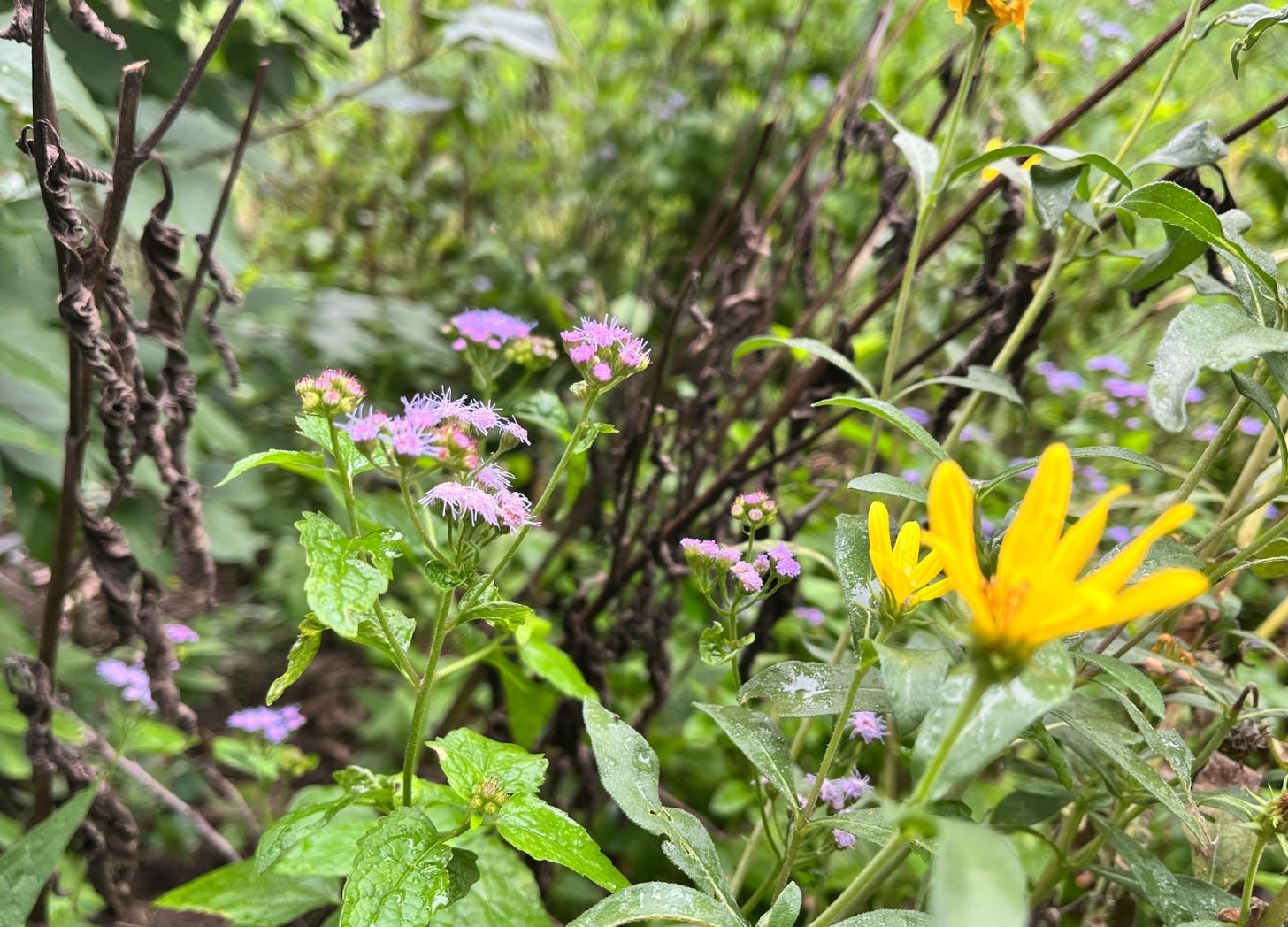
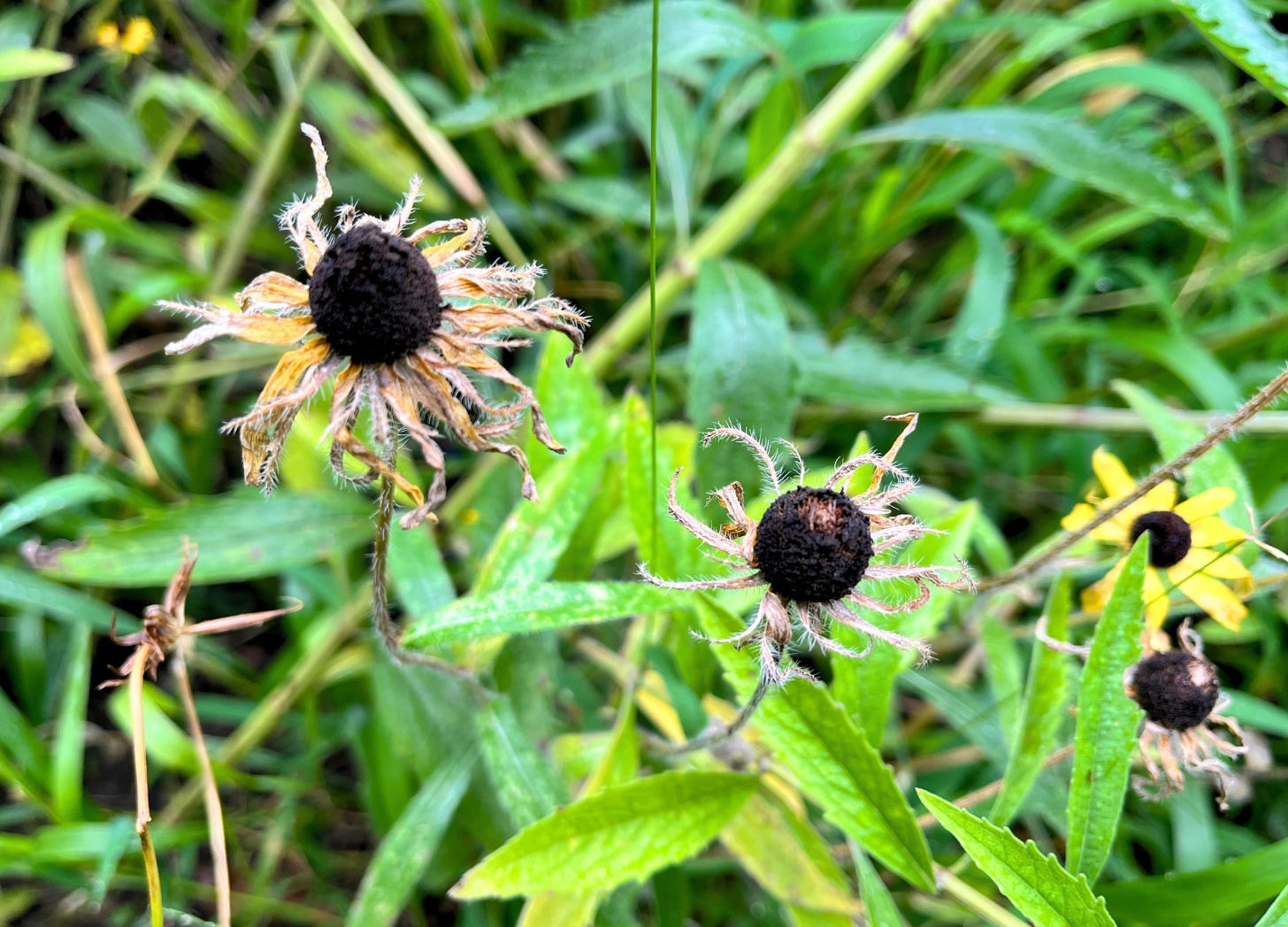
In the garden this morning, I could see the turn toward autumn that’s been building over the last few weeks. Living on the prairie, I’ve learned this rhythm, flowers and plants starting to die back is a sure sign winter is on its way. Our summers are brutal, and it’s easy to let the garden go a bit by August. I do it every year.
The garden, at least, still knows its sequence, even when nothing else does. This turn in the season is predictable, the same way my melancholy is predictable as the sun starts setting earlier each evening. My body knows what’s coming. Even if I don’t like it, it’s still a rhythm I can rely on. And maybe that’s part of what Ordinary Time means, a predictable sequence. The lush vibrancy of summer gives way to the garden dying back, autumn moving into winter.
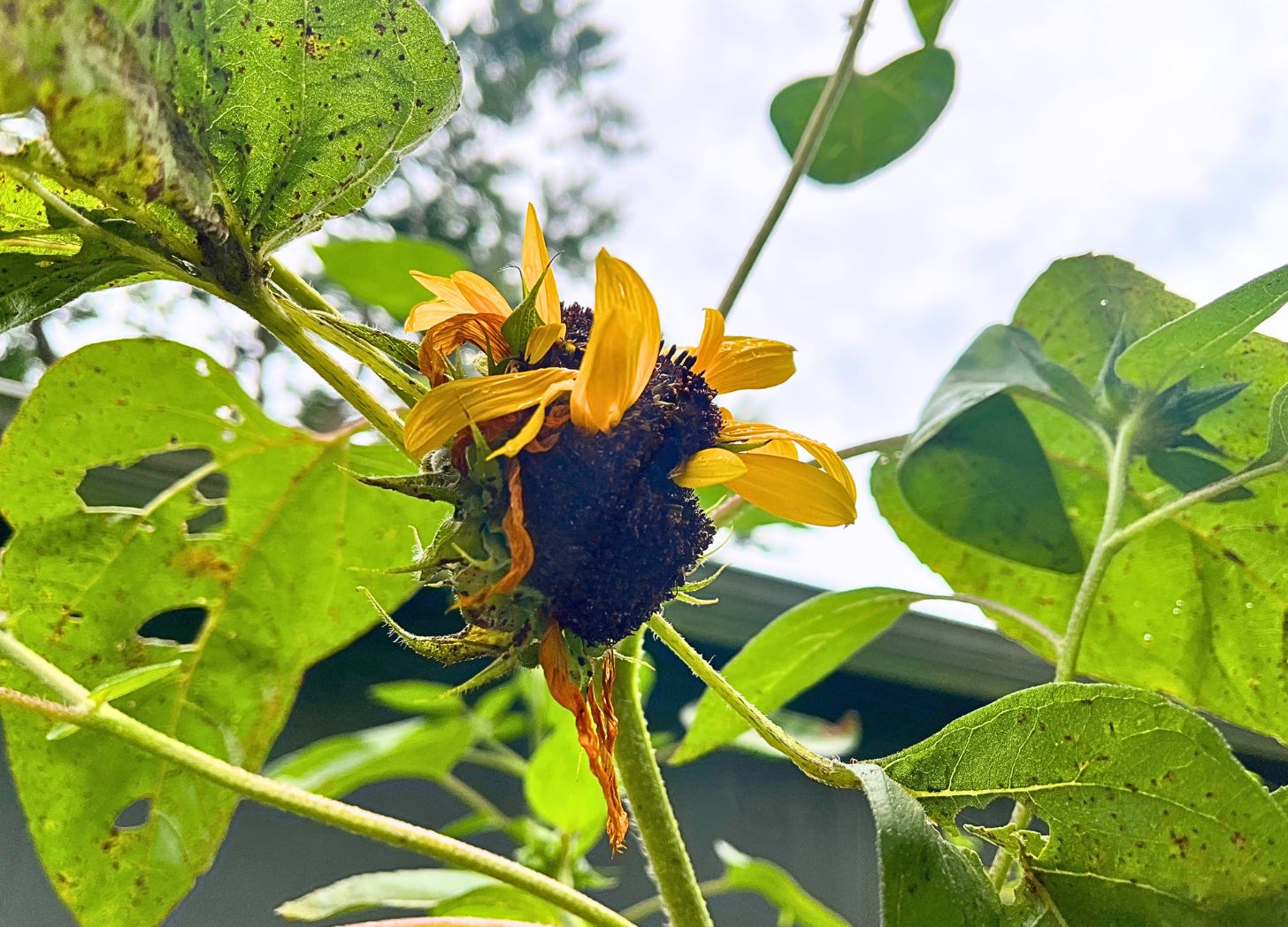
My sunflower holds it all right now, blooming and dying back on the same stem.
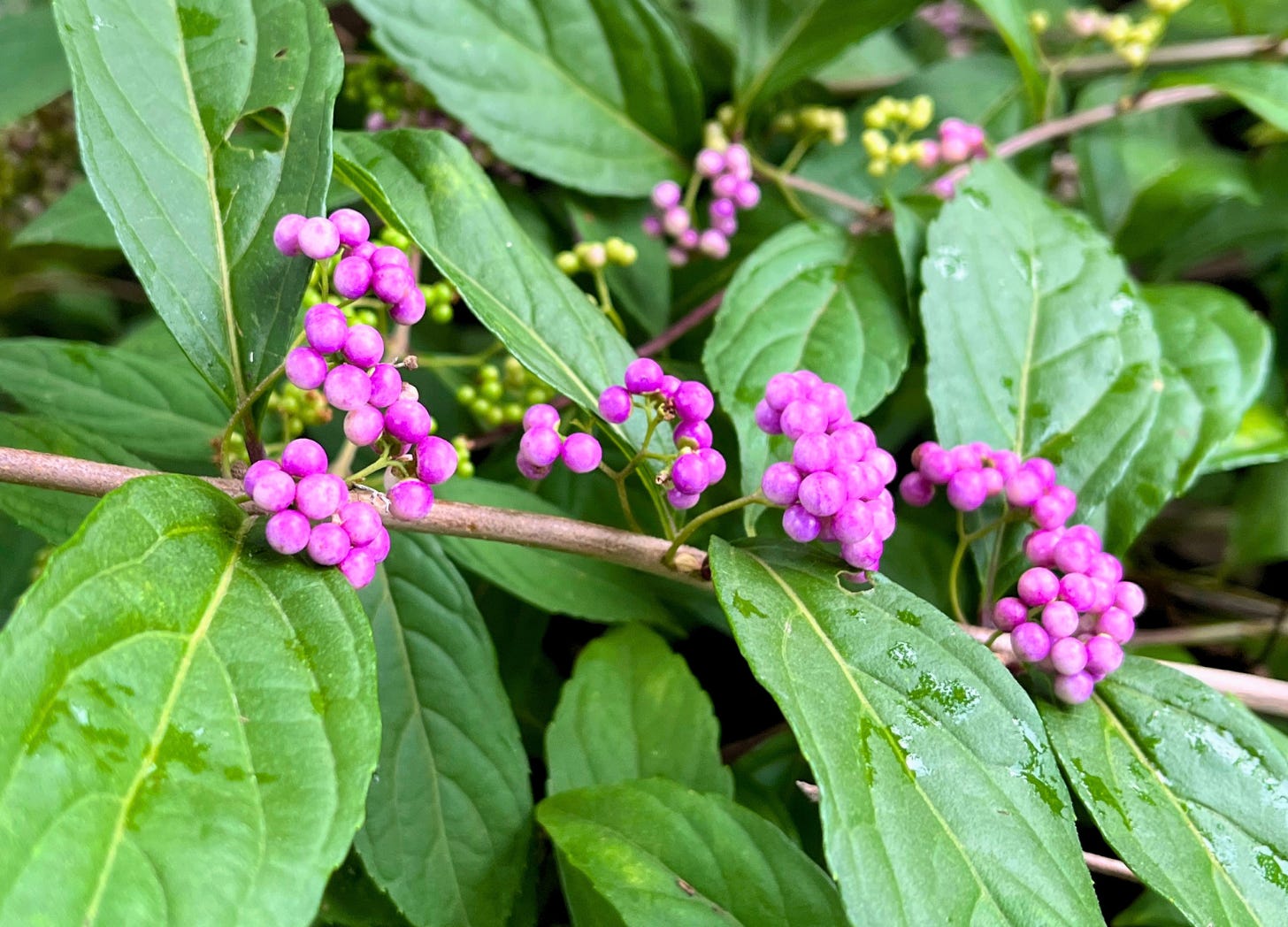
Not everything is going quiet, though. The beautyberry, tall coreopsis, chocolate daisy, ironweed, blue sage, goldenrod, asters. All of them are coming into their own at this moment, vivid and undeterred.
The beautyberry doesn’t cancel out the sunflower. Nor the sunflower, the beautyberry. They’re both just true at once, right here, right now.
This too is part of our prairie rhythm.
An unobstructed view that invites me to see both.
Planted squarely in the midst of the living and the dying.
What powerful words…Ordinary; ordinary; the absence of the ordinary; blooming & dying back…I love your writing.
Beautiful writing! 💜♥️💜