

“A whole civilization will die tonight, never to be brought back again.”
I read those words after my phone alarm went off on Tuesday morning, the third day in the Octave of Easter. A time to celebrate life, not destroy it. In 1979, as a girl, I wrote in my diary about fearing the Iran Hostage Crisis would cause a nuclear war. Then, I feared for the US hostages, now, I fear for the Iranian people.
Last week, I wrote a post on henbit, a plant native to Iran. I wanted to write about my fear and anger toward the political leaders of my country, but everything I typed felt like a social media tirade. So I went back to the garden, to what was blooming in my yard, and researched the native plants and flowers of Iran. That’s when I found the henbit and her story began to unfold. By telling her story, I could tell my own. By attending to the henbit, it became a part of me. But I wanted more, to go even deeper.
That’s when I found Forugh Farrokhzad, an Iranian woman and poet.
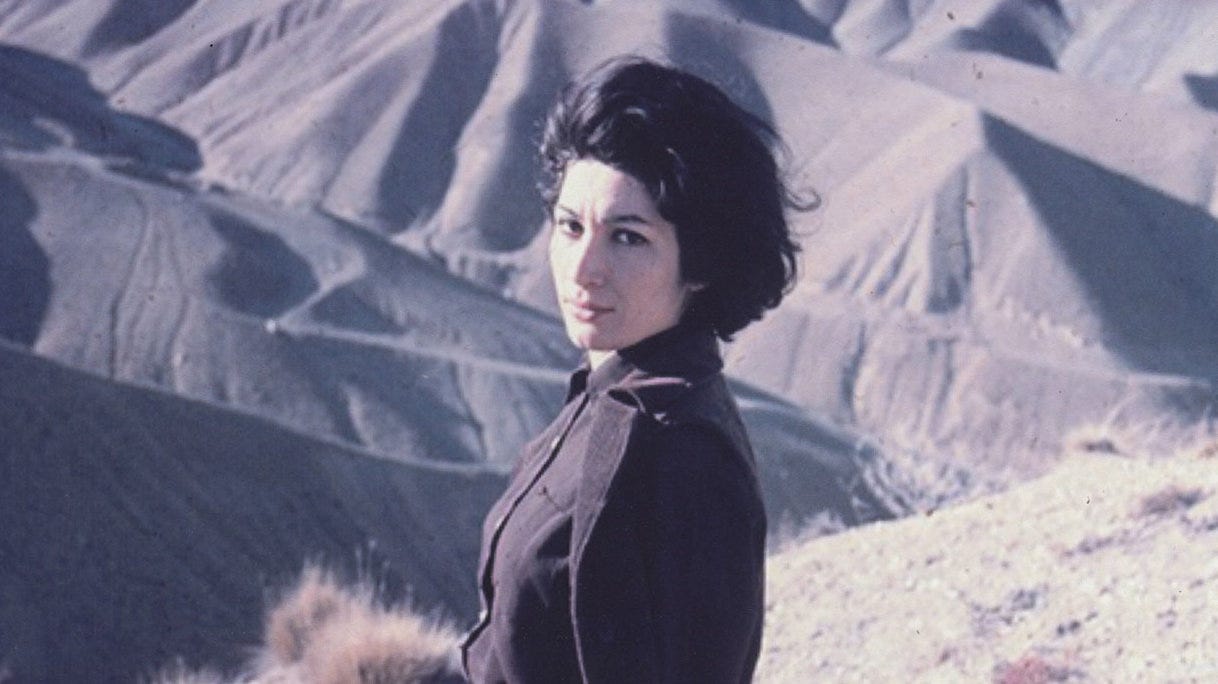
Forugh died in 1967, one year before I was born. Twelve years before the Islamic Revolution. The revolution that led to her poetry being banned for more than a decade. When I first read Bathing, I was startled by its sensuality. I think I may have blushed a bit...her raw, lusty words were the last thing I expected.
I shed my clothes in the lush air
to bathe naked in the spring water,
but the quiet night seduced me
into telling it my gloomy story.
The water’s cool shimmering waves
moaned and lustily surrounded me,
urged with soft crystal hands
my body and spirit into themselves.
A far breeze hurried in,
poured a lapful of flowers in my hair
breathed into my mouth Eurasian mint’s
pungent, heart-clinging scent.
Silent and soaring, I closed my eyes,
pressed my body against the soft young rushes,
and like a woman folded into her lover’s arms
gave myself to the flowing waters.
Aroused, parched, and fevered, the water’s lips
rippled trembling kisses on my thighs,
and we suddenly collapsed, intoxicated, gratified,
both sinners, my body and the spring’s soul.
by Forugh Farrokhzad
Translated by Sholeh Wolpe
Can you feel the cool water? Smell the damp minty air?
Forugh fought against the forces that tried to drown out her voice. Married at 16 to escape her family, divorced by 19, her ex-husband refused to let her see her son. She had a nervous breakdown, was admitted to a psychiatric hospital, and underwent electroconvulsive treatments. She died in a tragic car accident at 32.
Even with so much tragedy, nothing was as important as surrendering to her truth, speaking with a sensual, unapologetic freedom in 1960s Iran.
What started as an attempt to make a connection between me and Iran, that initially found voice through the henbit, found a deeper connection through Forugh’s poetry. With the henbit, I wrote how attention is an act of love. Forugh’s poems have deepened my understanding of the power of attention. By attending to her as one tiny part of a culture that my government wants to annihilate, my curiosity and love become an act of resistance.
Forugh wrote of Eurasian mint. I have been exploring the henbit. Today I saw my first bumblebee of the year drunk on the lavender henbit flowers. A bumblebee being fed by a plant that crossed the ocean in the dark belly of a ship close to 300 years ago. Just like Forugh’s verses, both survived and found their way into my soul.
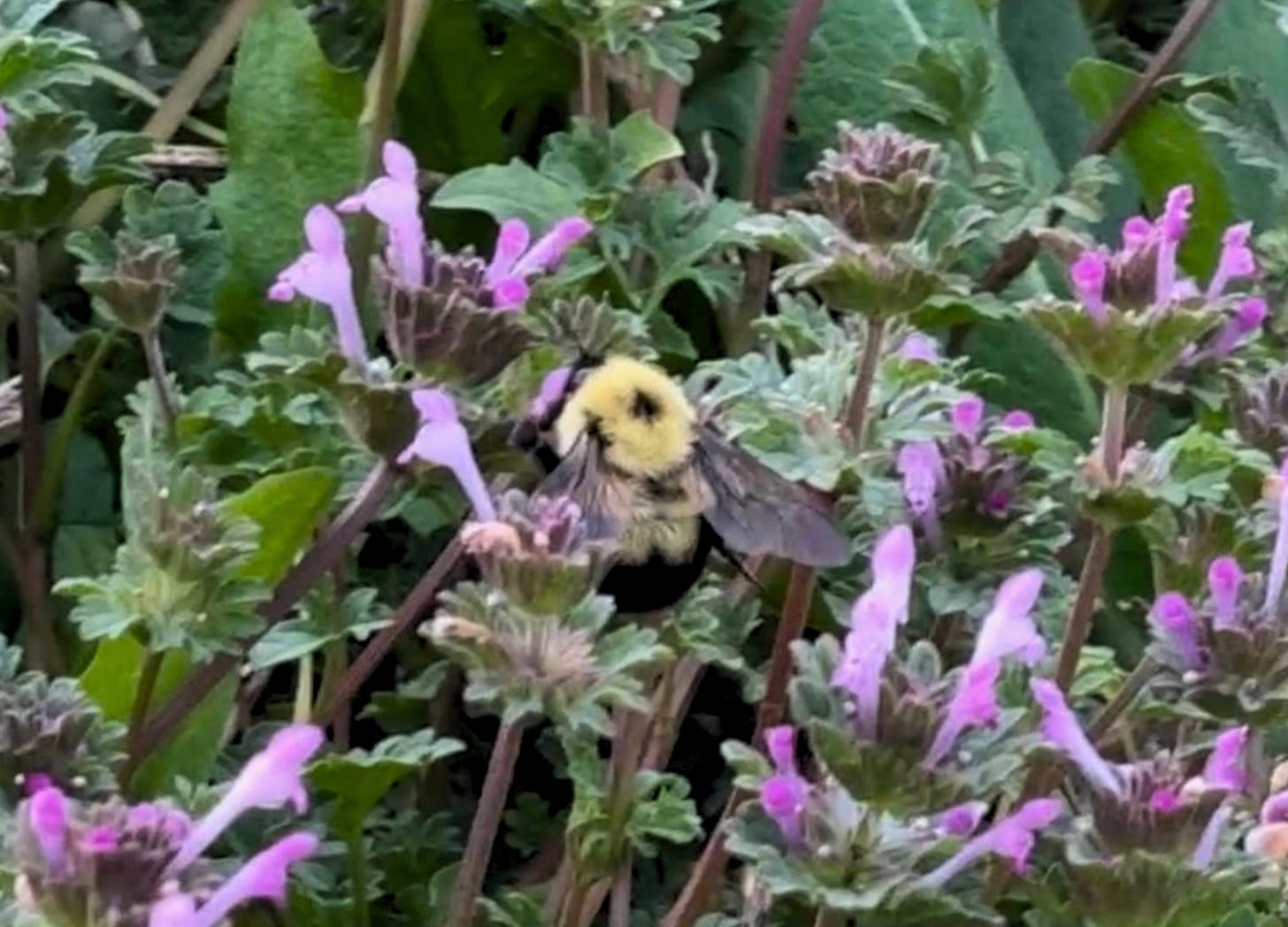
photo by Tray Lamkins