

“Our indigenous herbalists say to pay attention when plants come to you; they’re bringing you something you need to learn.”
― Robin Wall Kimmerer
On my knees in the garden, I brush aside the winter blanket of oak leaves - dry on top, damp underneath. Searching. A few natives have barely emerged, still hugging their earthen blanket. Not surprisingly, it’s the henbit putting on the most robust show with its dainty purple flowers and dark green leaves.
A common sign of early spring in yards, parks and fields is henbit. I remember driving by a field covered in purple. Pulling over to see what “prairie heather” had stopped me in my tracks, I realized it was just plain old henbit. After that encounter and seeing its purple magic carpet, it left me wanting more.
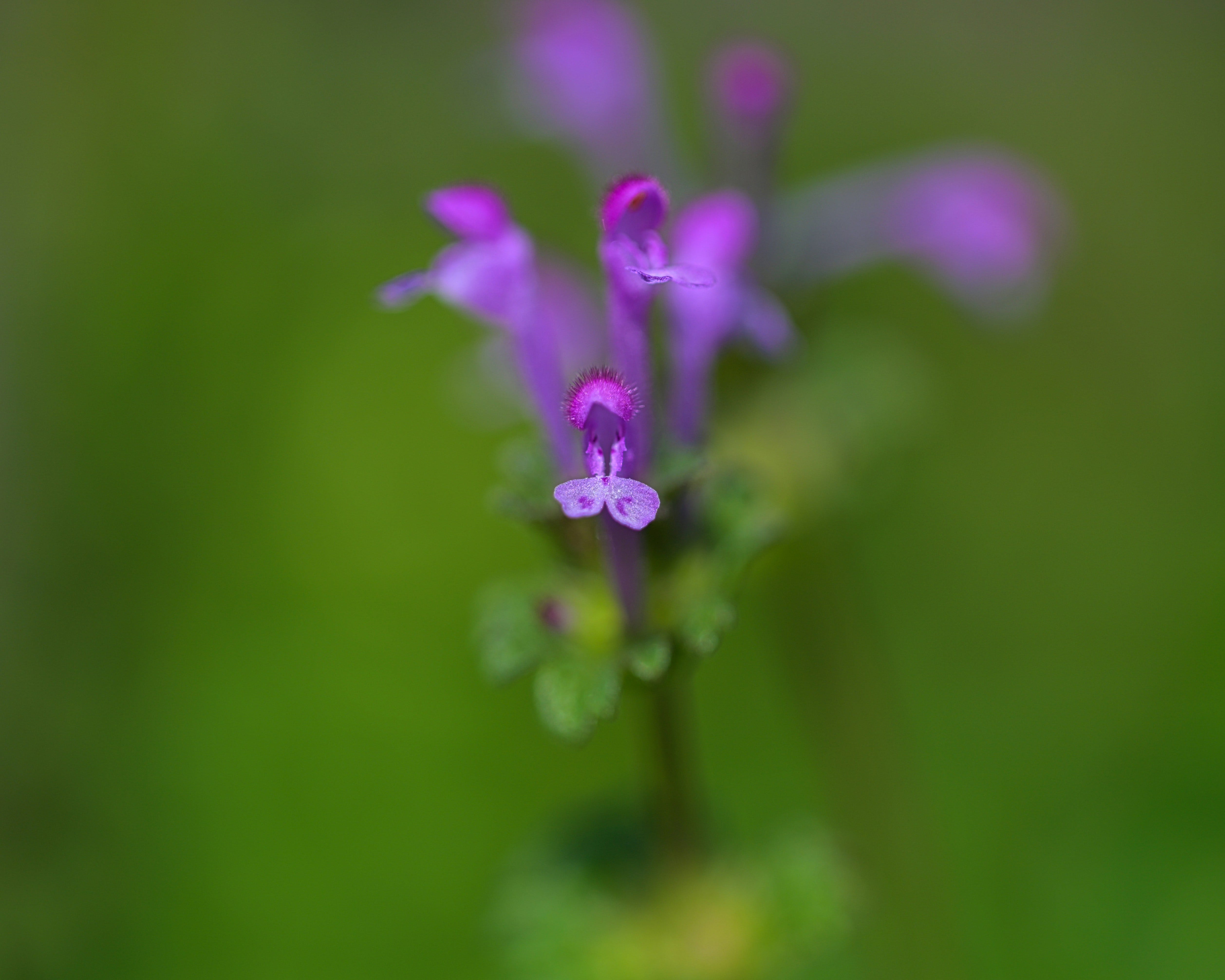
Photo by KP Bandyopadhyay on Unsplash
Henbit, Lamium amplexicaule, is a member of the mint family. Crush a few of its leaves in your hands and breathe in the herby scent and you will know why it’s family. Not native to the prairie or even to the US, henbit likely made its way here via ships’ ballasts in the 1700s. Seeds were mixed into the sand, soil and rocks loaded at port to keep the ships balanced on their journey across the Atlantic. Once the ships arrived the ballast was deposited on the shore. And henbit took root in America.
Originally it’s native to the Irano-Turanian floristic region, one of the world’s most important evolutionary and biological diversity centers. This little henbit has adapted and thrives in the extremes which describes both its original home as well as the one it has immigrated to in Kansas.
Henbit offers early spring nectar for bees and other emerging pollinators. It’s been used medicinally and is a nutritious, edible wild green packed with iron, fiber, and vitamins A, C, and K. And it’s a musical instrument! The tiny purple flowers sound like a kazoo when blown.
I have been settling in with the henbit for a few weeks now, wondering what it has to teach me? What do I need to learn?
It’s much harder to kill something when you know its name and what it brings to the world by its very being. I think about the lawn lovers with their herbicide and their tidy grass. Perhaps they just haven’t truly met the henbit yet. I’ve seen enough to believe if you allow yourself to really know a plant or a person it changes how you move through the world. It changes what you're willing to call expendable.
As a chaplain at the bedsides of those who were dying from AIDS in the mid-1990s, I learned that lesson. In particular, I remember Carmen. She had struggled with drug use and was estranged from her family and kids. She was only in her early 40’s but looked much older. I sat with her daily. Listened. Learned Carmen’s story. I was the only person who visited her. The last day I saw her she gave me one of her coloring pages. Her hands shook and her words were failing her, but she wanted me to have this piece of her. The following Monday, I walked in and she was no longer there. Sitting at her bedside all those weeks and doing my best to be fully present was the hardest part of what I learned in chaplaincy training. Ultimately, all I could give was my presence, my attention. Simone Weil wrote often about this. She believed that at its most pure and detached our full attention was prayer embodied. I hope I prayed well with and for Carmen.
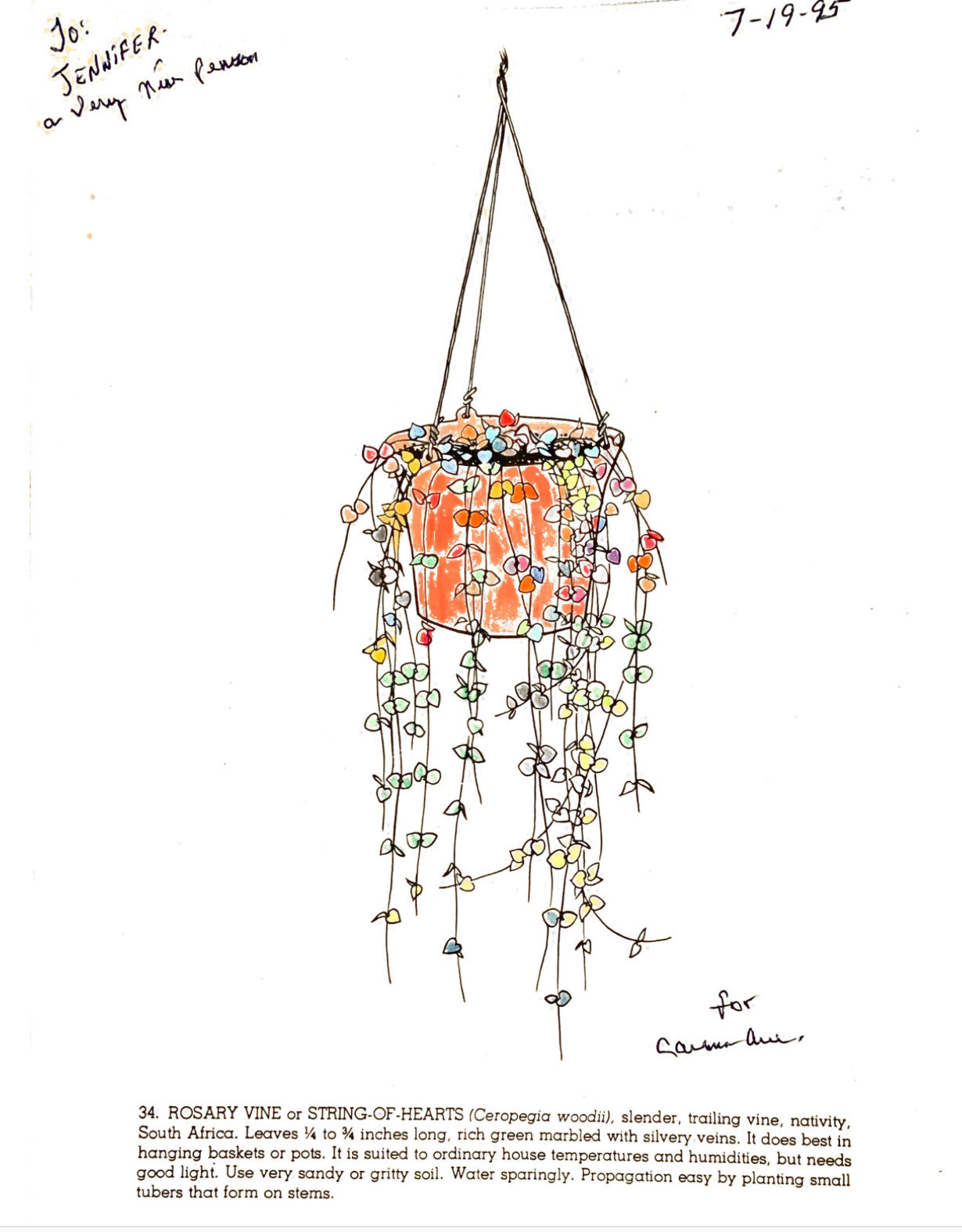
You cannot be indifferent to someone you have truly seen. And plants, I am learning, are the same.
Once you know that henbit carries nectar for the first bees of spring, it becomes very difficult to see it as a problem to be solved. Once you know it crossed an ocean in the belly of a ship mixed into sand and soil, traveling in the dark to a new world it had not chosen, you appreciate its adaptability. Once you learn that children blow its tiny flowers like kazoos and call them fairy horns, you cannot look at the field of purple the same way again. It has become a kazoo orchestra.
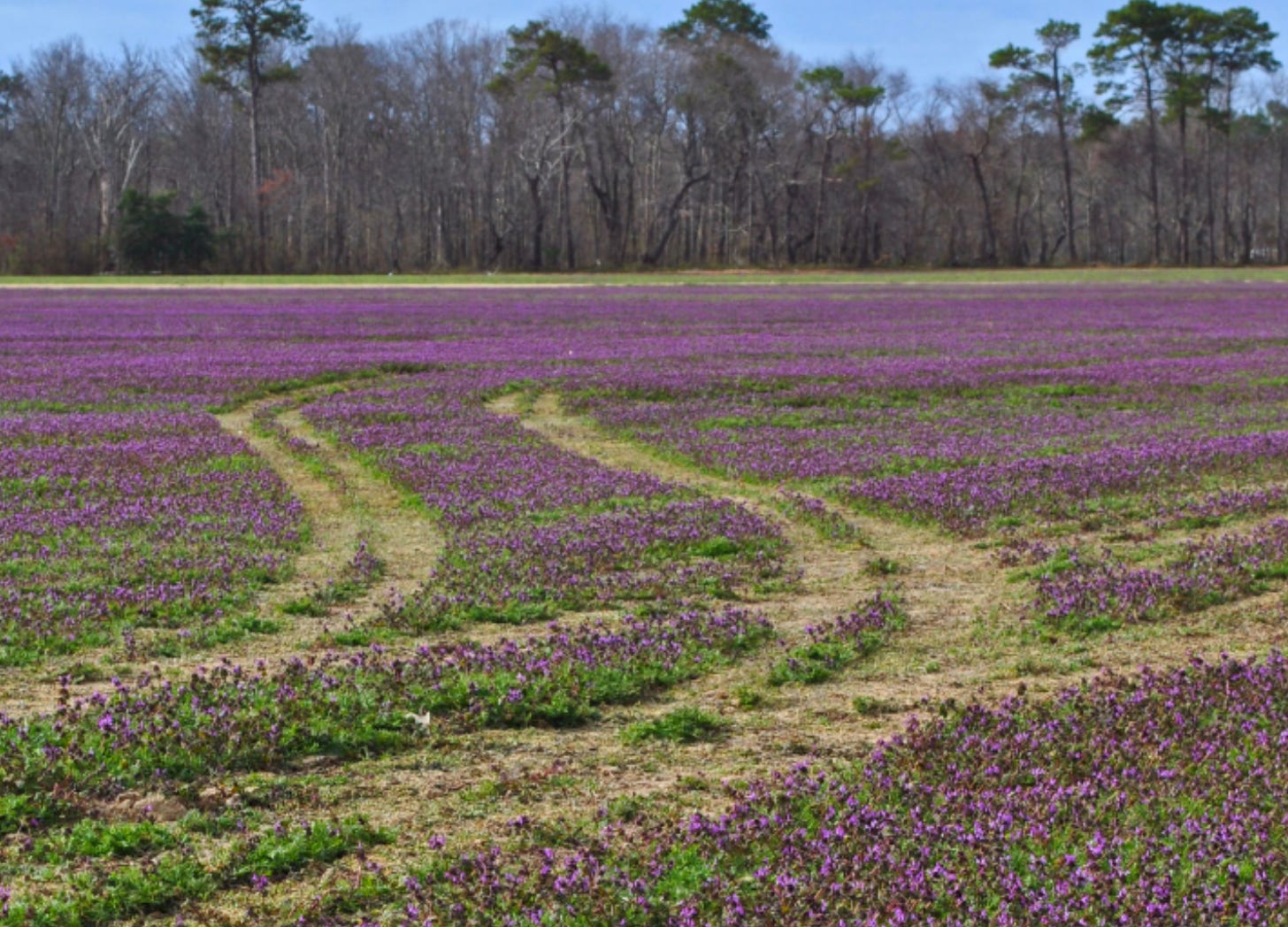
photo from Tidewater Gardener
Naming is only the start and it’s not just identification. It is the beginning of a relationship. Attention. The first act of love.
Robin Wall Kimmerer writes in some Native languages, the word for plants translates to those who take care of us. The henbit was here before I knew its name, offering nectar to bees, anchoring soil with its roots, and bringing purple into view again after long gray and brown winters. It never needed my attention to be what it was. But my attention to it, is changing who I am.
I am still learning what henbit is trying to give me. But I think it starts here: that attention is not passive. To really attend to something, to learn its name, its origins, its gifts, its laughter, is to acknowledge its sacredness. And once you have crossed that threshold, the question of whether to kill it becomes impossible to even imagine. Because we become kin with that we attend to.
The purple little kazoos are out there in the fields and in my backyard. The bees are starting to find them.
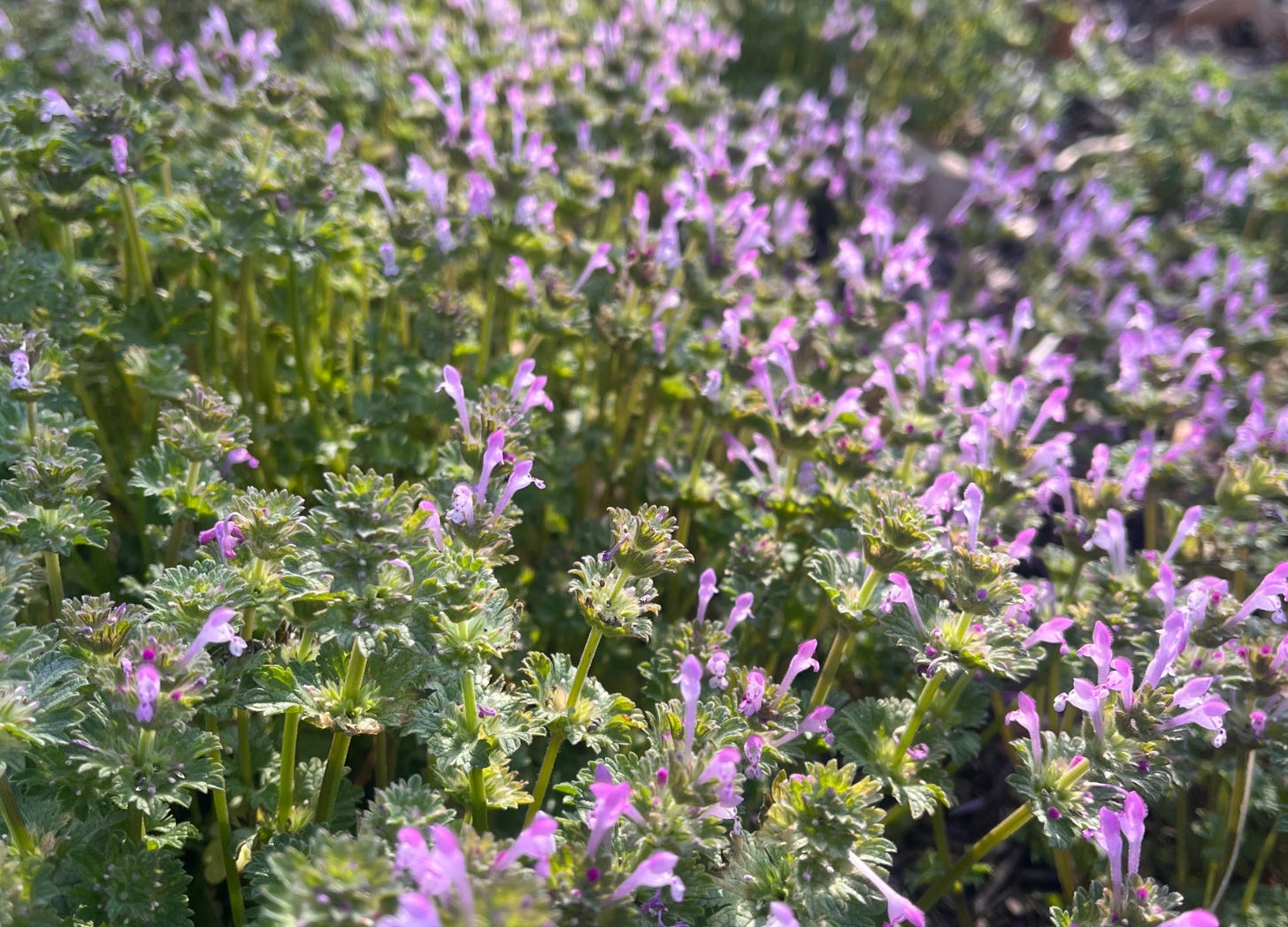
photo by Jen Wewers, Antioch Park, Overland Park, KS
Too many quote worthy moments in this beautiful writing to gush over just one. I had a blast sitting in my yard, holding really still, and watching the little bees and other flying insects zooming around eating.
What a beautiful, gently profound and thoughtful text.
“I’ve seen enough to believe if you allow yourself to really know a plant or a person it changes how you move through the world.” — this is truly so.
Thank you.