

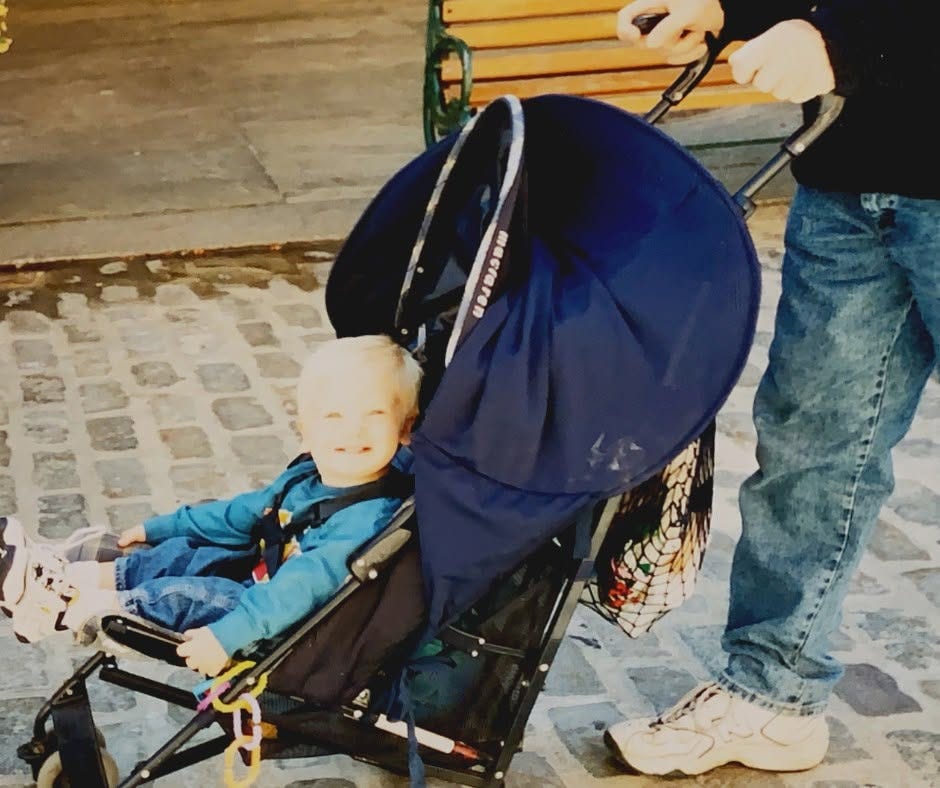
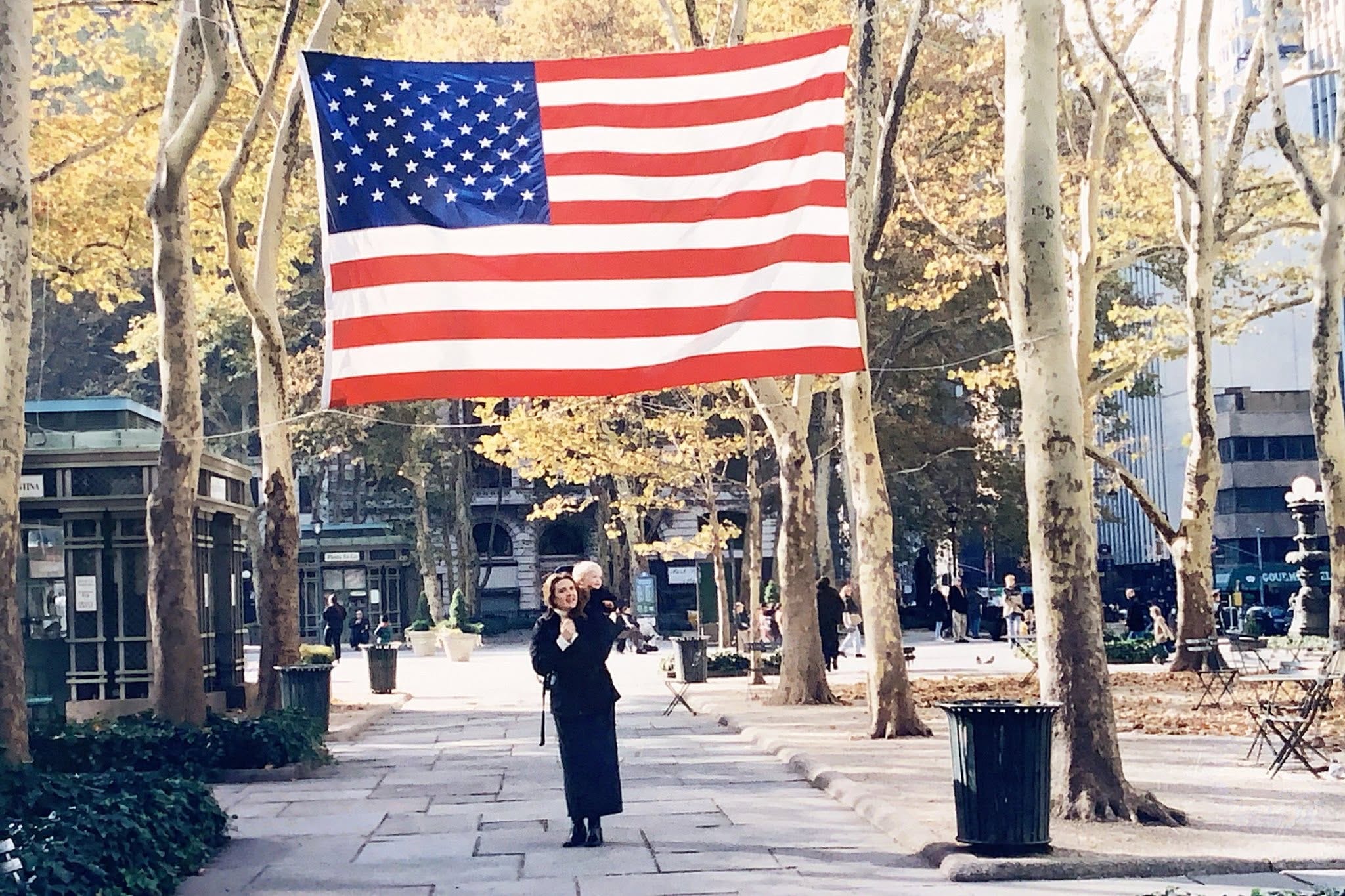
Bob and Max walked me to work most mornings. It was our routine — out the door, past the ambulance bays on 16th Street, then into Stuyvesant Square Park. The east side of the park, by Beth Israel Hospital, was where the homeless folks gathered. We crossed 2nd Avenue into the west side of the park, facing St. George’s Church, then continued on 16th and up to 17th at Irving Place.
September 11th started no differently.
September in NYC is gorgeous. The heat, humidity, and smell of urine in the streets move out, and we embrace the clear, cooler days of fall. So many of us who were there that day talk about the blue sky. What a beautiful morning. The sky was so blue. Max was 18 months old and barking orders at his dad from his throne in the stroller. Bob and I were probably talking about what he was going to pick up for dinner. It was a normal, simple morning. One we never expected to remember.
We reached my office a little before nine. I kissed them both goodbye — Bob, and then Max. Bob turned the stroller back the way we’d come toward the rest of an ordinary day.
Neither of us knew the first plane had already hit.
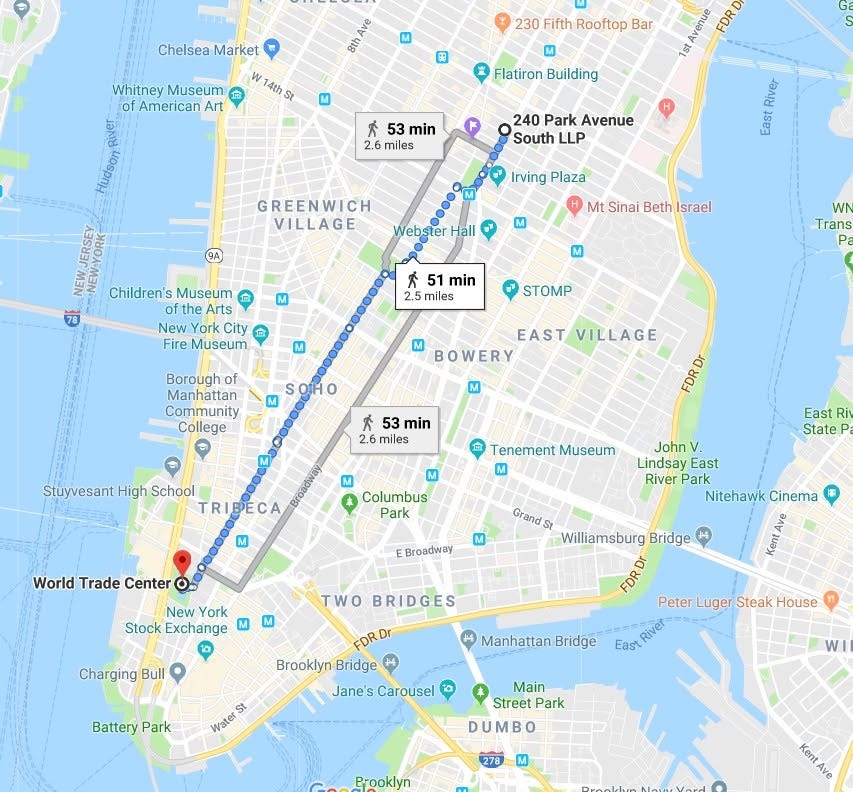
Thinking of who I was with that morning: my colleagues at Beth Israel Medical Center Development office— Molly, Tatiana, Sandra, Vickie, Zarela, and others. Our morning unfolded 2.5 miles from what would become known as Ground Zero.
Almost as soon as we had arrived for work, we heard something had happened. The news arrived in snippets. Sandra started crying when she heard a plane had hit one of the towers. Her cousin worked there. Which tower was it? Human Resources had a TV in their office and they were watching the news. Sandra ran up there.
We were all trying to reach friends and family. We didn't know what was happening. Cell phones weren’t working.
The sky was so blue.
In about 45 minutes we would look out our windows at the streams of people walking up from the World Trade Center and downtown. We could see them covered in dust. That line of people would last for hours.
From that moment, we all started trying to make our way home.
After Bob and Max had dropped me off at Beth Israel, they headed down to Tompkins Square Park — the locus of our life in NYC once Max was born. Later that day Bob shared that when they got to Tompkins, a woman told them a plane had just flown over the park so low that it scared her. Within a few minutes, they both learned what had happened to that plane and those aboard it.
I still couldn’t reach Bob. I had no idea where he was. But I also knew that my native New Yorker would run toward trouble before he’d run from it. I knew he would be headed down Avenue A toward the World Trade Center to find out what was happening. And he would be pushing a stroller with our son in it.
I picked up the landline phone and called home to Kansas. I needed to hear my dad’s voice. Mom answered. I told her I was okay. Dad got on the phone, and it was the first time I allowed myself to cry. “Dad, I don’t know where Bob and Max are. What if they were on a long walk downtown?” My dad said quietly and calmly, “Honey, I am sure they are fine. They are okay, and you will be okay. I love you.”
As a parent, I cannot fathom how hard it must have been for my folks to take that call.
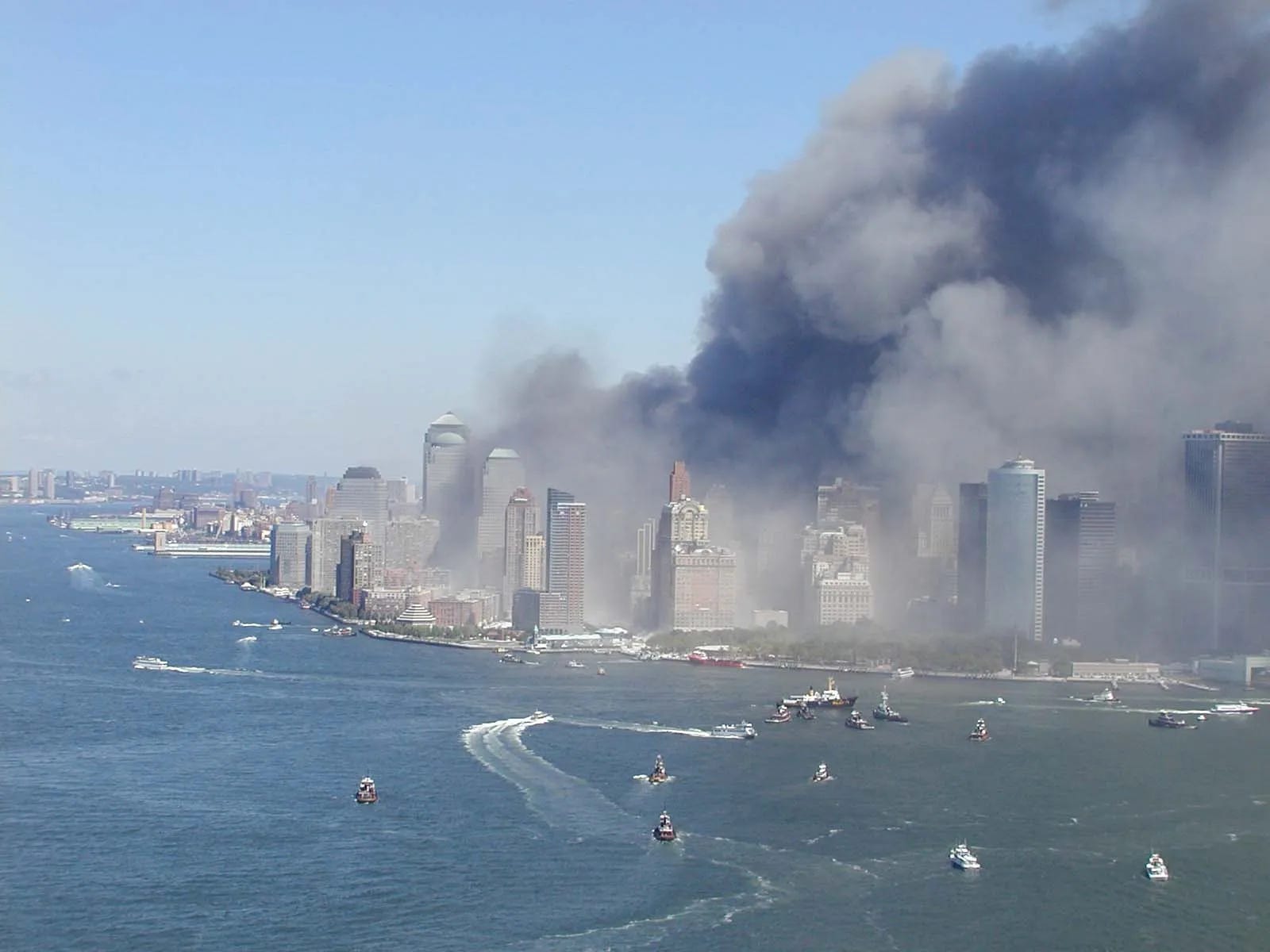
Around the same time I left work to find Bob and Max, Bob’s oldest son, Kevin, was working at the American Stock Exchange. The guys on the trading floor felt the first tower fall and the dust and debris came pouring in. Everything went dark. But they didn’t know exactly what had happened. They also had no idea what was about to happen — the second tower falling.
They stood together debating what to do. Do we stay? We don’t know what is happening. Do we go? If we go, where do we go? We don’t know what’s on the other side of the door. They made a decision.
They wrapped cloths around their faces, opened the door, and ran west to the Hudson River. Boats came for them — Coast Guard, water taxis, ferries, yachts, tugboats, fishing boats, anything that floated. Kevin was one of thousands those boats carried across to New Jersey.
It is considered the largest maritime evacuation in history: over half a million people were rescued, and Bob's son was among them.
I eventually found Bob and Max, and they had been down on Houston Street. Bob said the smoke and air were so bad he couldn’t keep walking downtown.
Once we found each other, we did what New Yorkers do — we went outside, walked our neighborhood streets, tried to figure out what we could do to help. We bumped into someone from church. The three of us stood in the middle of First Avenue, wondering if there was anywhere we could give blood. I would learn, when I returned to work, that along 16th Street Beth Israel staff had set up decontamination tents and other emergency supplies. But no one came.
No one came.
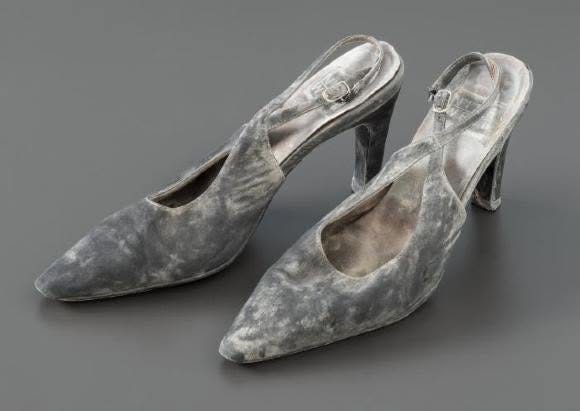
At Astor Place, we entered the KMart. As we stepped off the escalator, we were met with hundreds of dusty shoes lying in random piles all over the floor. It took a minute for me to figure out what had happened. To my right were aisles of empty shoe racks. The shoe department was decimated. All of those people, mostly the women who’d been wearing their work heels, had descended on Kmart for flats to make the long trek home. No buses or subways were running. All the bridge-and-tunnel folks had to get home by walking.
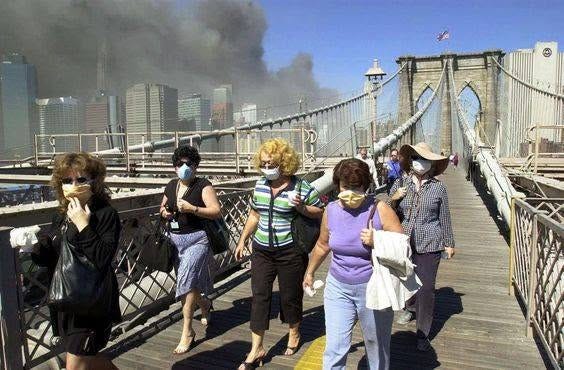
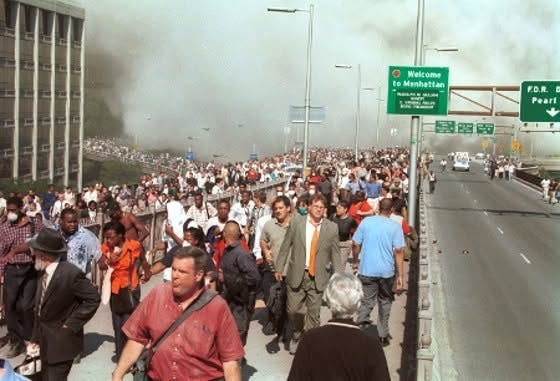
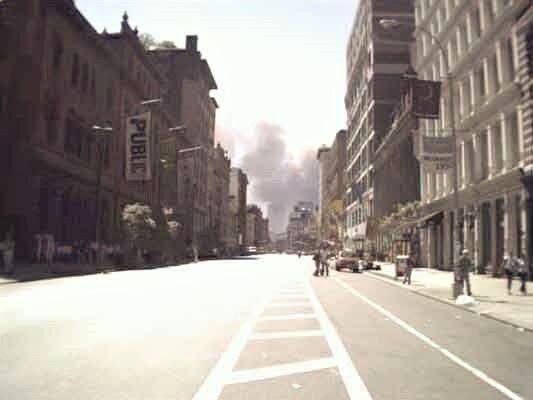
We lived at the corner of 14th Street and First Avenue. No car or truck traffic was allowed south of 14th. We walked (and pushed Max in his stroller) around the East Village streets empty of cars, delivery trucks, and buses.
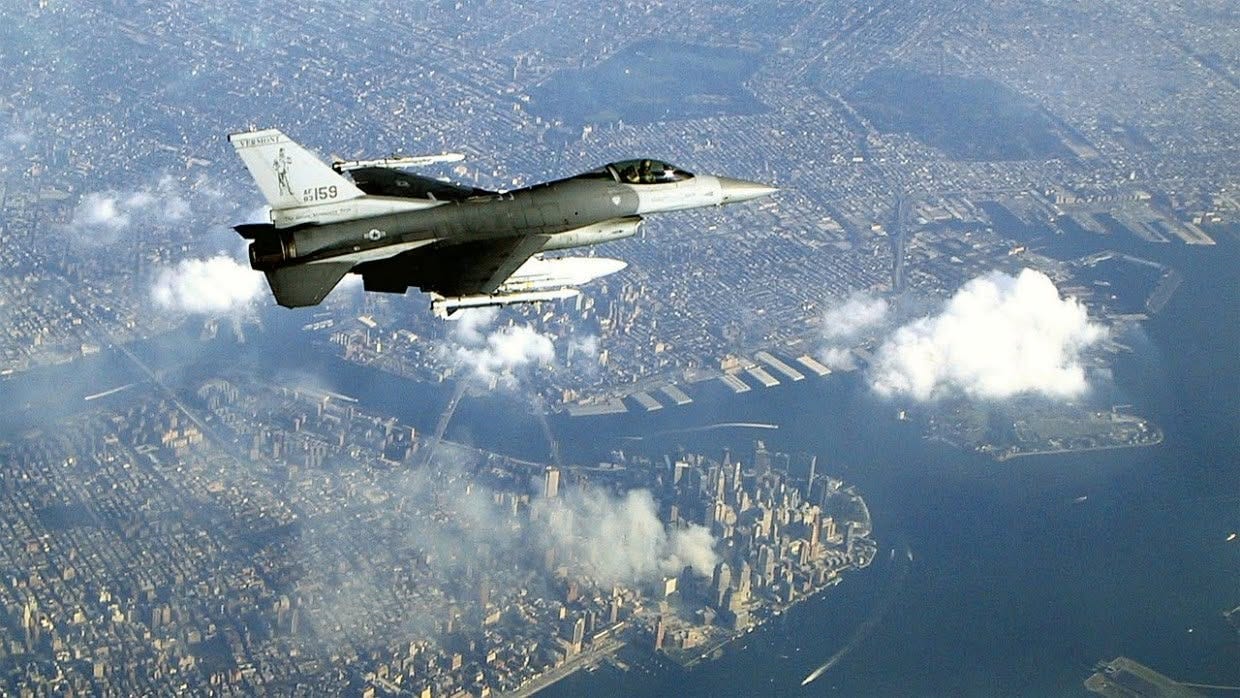
It was so quiet — except for the sound of fighter jets flying overhead.
We just wanted to find something to do to help, but there was nothing for us to do.
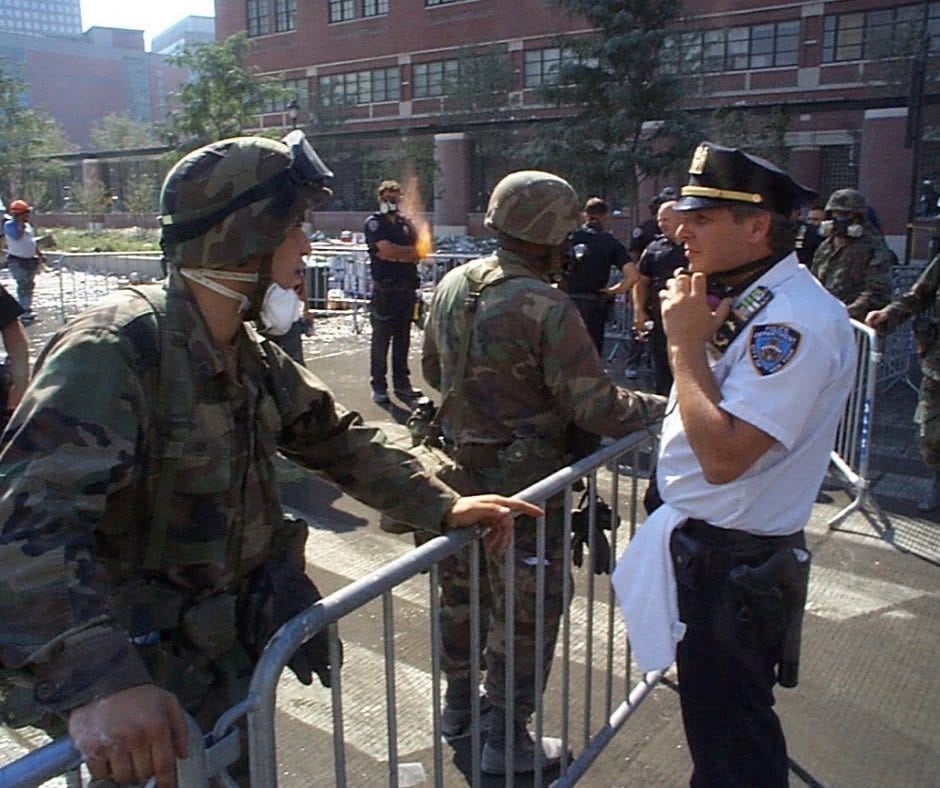
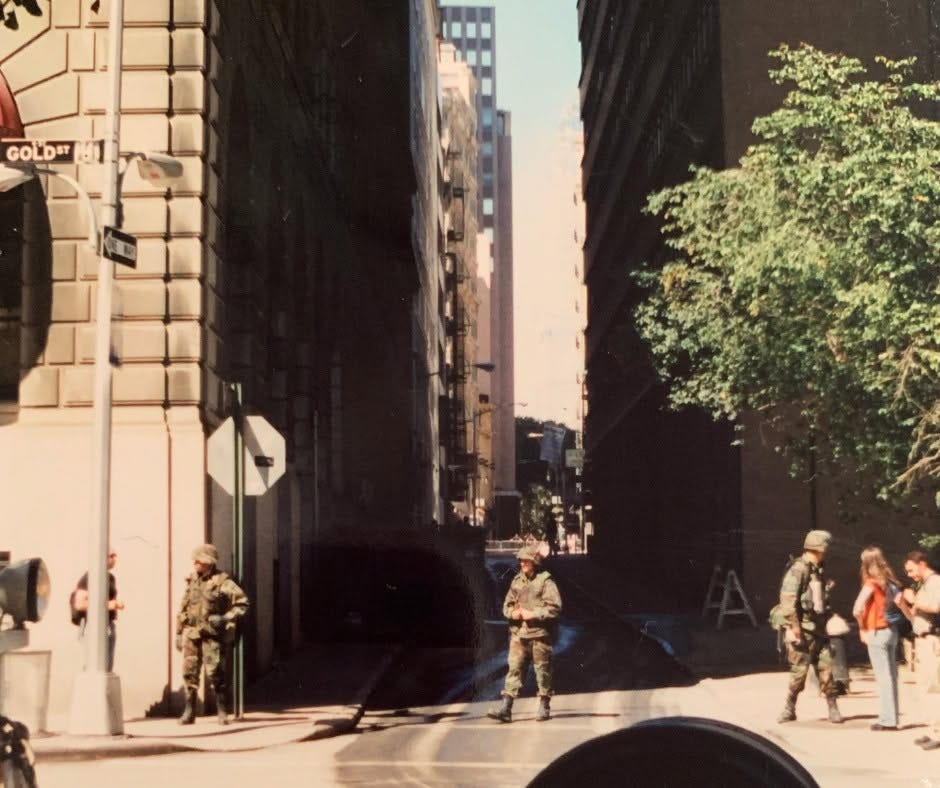
The National Guard lined 14th Street from the East River Drive to the Henry Hudson. It was surreal to pass armed guards as you crossed familiar streets. It made me realize how sheltered I had been growing up in the States. I had only seen things like this on TV. The days following 9/11 gave me a tiny window into the world that so many of our brothers and sisters around the globe face, living their lives in the midst of war. The first photo is of members of the National Guard lined up next to the ubiquitous barricades — it reminds me of what it looked like on 14th Street. The second is one I took in the days that followed, as we walked downtown closer to Ground Zero.
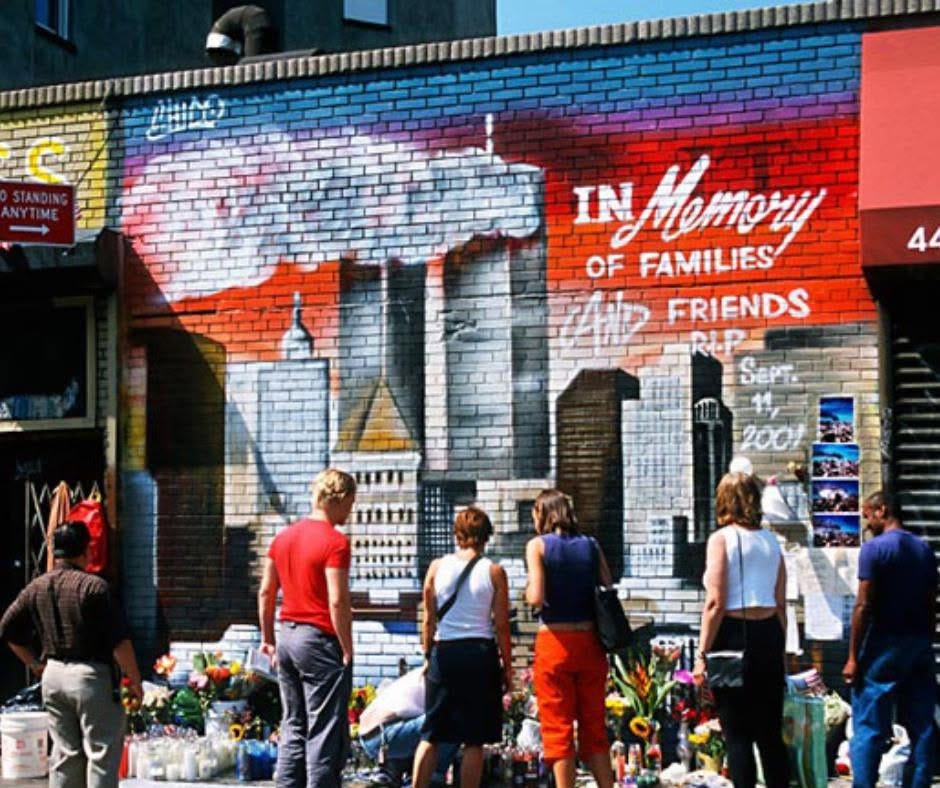
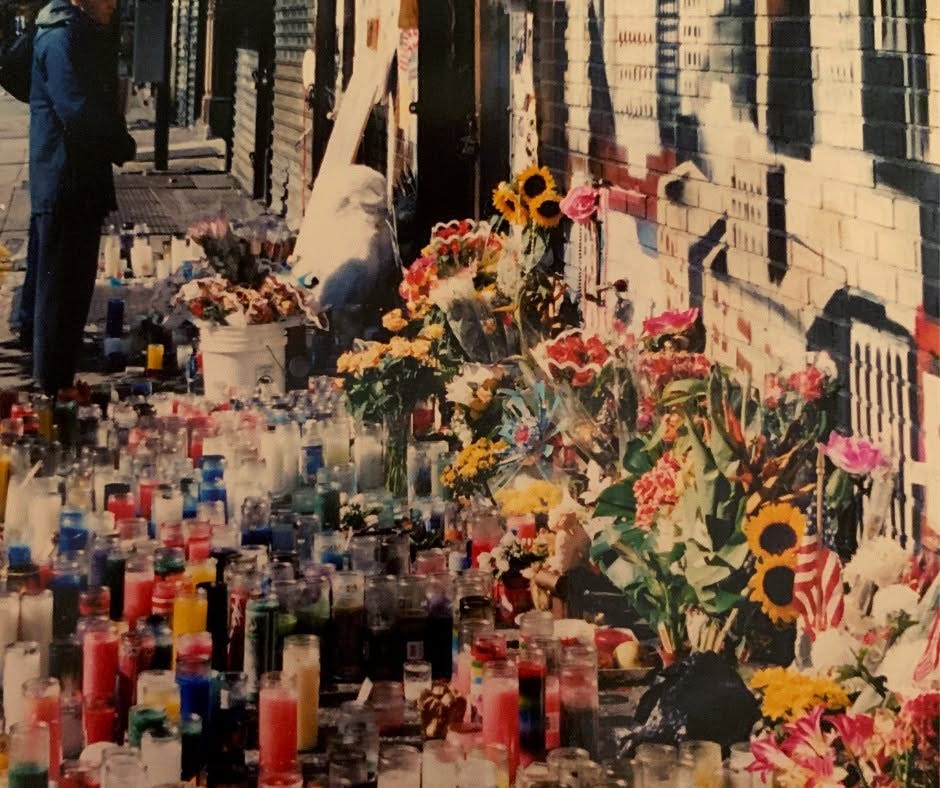
The memorials. I always tell people I have never felt so loved as I did the days following 9/11. I could feel the energy of all those prayers rushing in to hold us. We visited the memorials in Union Square Park, Washington Square Park, the Armory on 28th Street, and those down by Ground Zero. But it was this one at 14th and Ave A that became a regular part of my life. We walked down Ave A all the time. Chico, the graffiti artist, started working on his memorial mural on 9/12.
We just kept bringing flowers and candles and more flowers and candles... and the notes. The notes from family and friends of those who were missing... missing because we all held hope that someone would be rescued from the mountain of steel and concrete. It made so much sense to me that our memorials would be outside and on the street. That’s where the city is most alive, and that is where we came together, neighbors and strangers, and bore witness to those who died. We prayed for those left behind. And all the children who were growing up in a city so different from the one on 9/10.
With every step, we were walking on hallowed ground.
The air was sacred — no experience in church had ever felt more holy.
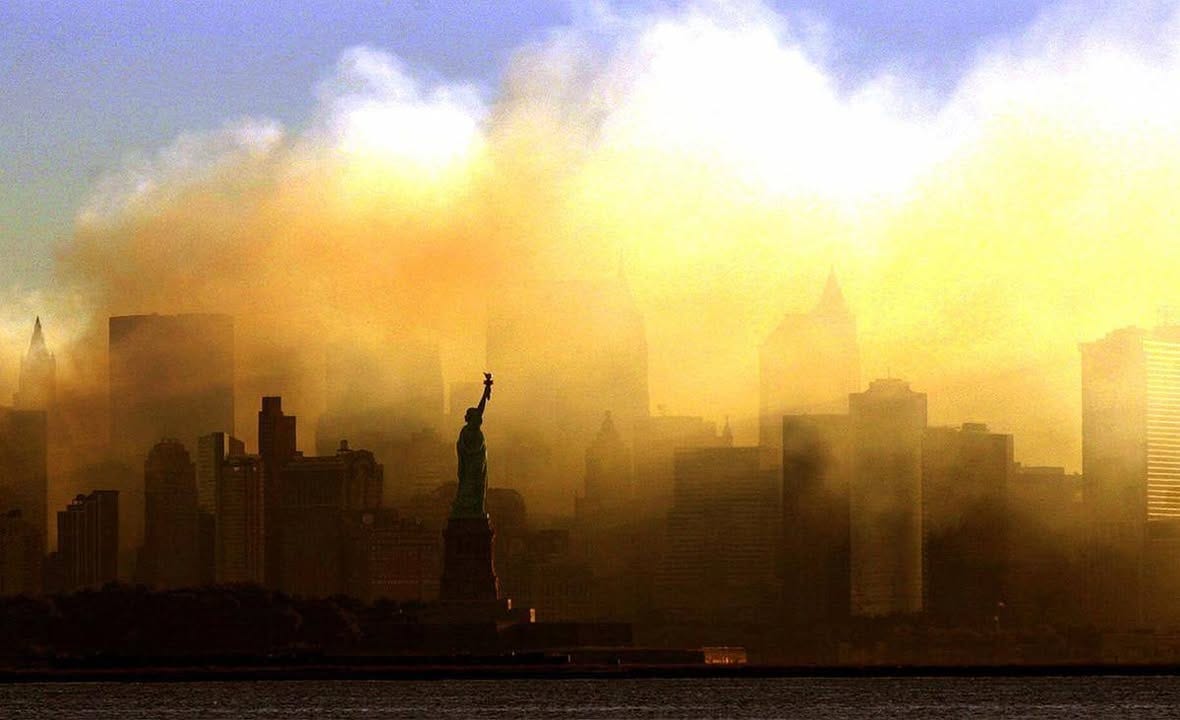
An overpowering burning smell did not leave the city for months. Being on the east side, we were lucky the winds were not blowing northeast on 9/11. My Beth Israel pulmonologist also cared for many first responders. I saw him a few weeks after 9/11 to have my lung volumes tested. I was struggling with my asthma and unable to breathe.
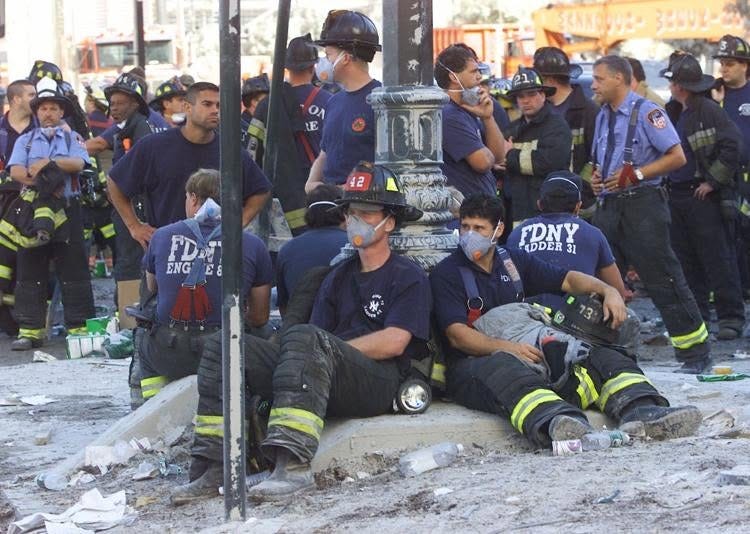
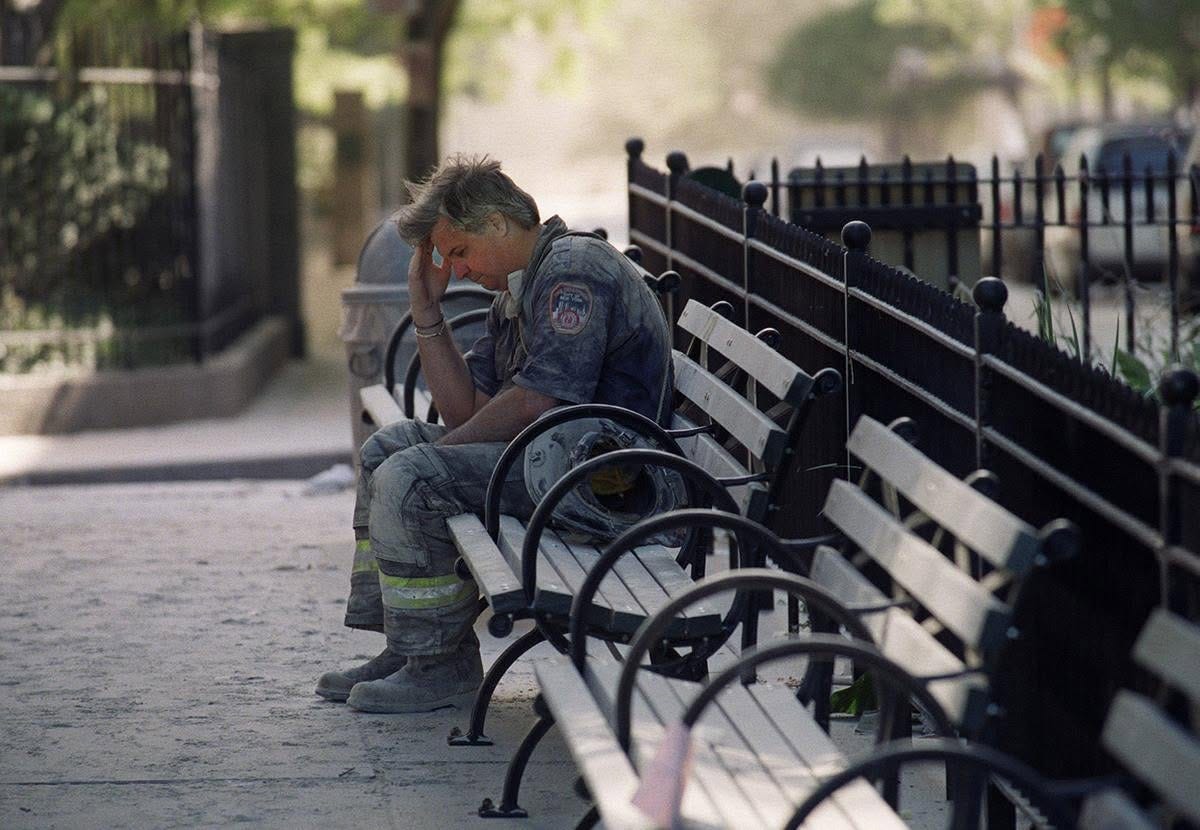
FEMA had given us a HEPA vacuum and money for a high-powered air purifier because we lived so close to Ground Zero. In between breathing tests, the pulmonologist shared how he begged the firemen who came to him to take breaks from combing through rubble to give their lungs time to rest and recuperate. Very rarely did they comply with his recommendation. Since 9/11, over 9,000 first responders, recovery workers, and residents have died from 9/11-related illnesses.
As of this week, we, along with the entire world, now know how toxic the air was that we breathed for months. It’s not a surprise to any of us who lived there. We could feel it.
We lived in Stuy Town, the bastion of civil servants, but we only knew of one firefighter who died. Bob had a number of friends who were NYPD, FDNY, NYC Transit Police, and others. Det. James “Jimmy” Wheeler was a longtime neighborhood friend of Bob’s. Jimmy was known for singing “Danny Boy” at every funeral, wedding, christening, or any other time he could cajole everyone to listen. He had a harrowing tale from 9/11. I found an online memo from him and his partner about that day parked in front of the Towers. It describes in detail everything that happened. I remember a photo of Jimmy emerging from the subway covered in dust that ran in a lot of the newspapers. He’s the person I knew who was closest to the immediate aftermath.
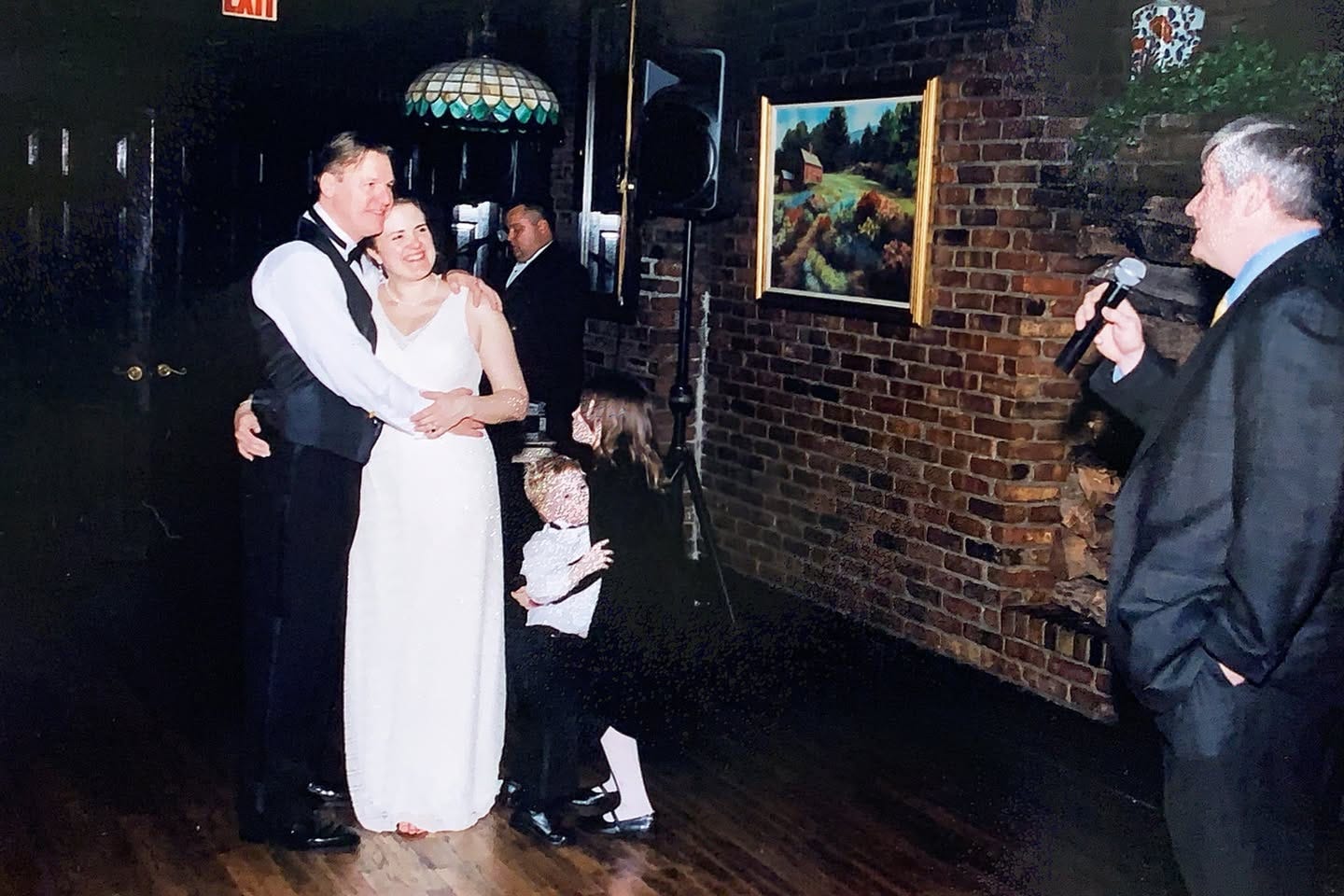
Below are photos of Jimmy singing — you guessed it — Danny Boy, at my wedding in 2004. I remember listening and thinking how easily things could have been so different, and I never would have been serenaded by him. Danny Boy sounded the sweetest that day.
There was a coffee cart on the corner I rounded each workday at 17th and Park Avenue South. It was run by a sweet man. I didn’t know much about his life beyond our few minutes each morning. Niceties exchanged. He always remembering my order: coffee with cream and a cranberry orange muffin. He brought an easy kindness to this regular ritual.
The day after 9/11, his cart wasn’t there.
I didn't think much of it at first. But as the days went on and the corner stayed empty, and as anti-Muslim sentiment began spreading across the country, my worry took a different shape. I didn’t know if he was safe. I didn’t know if someone had hurt him, or scared him into hiding, or worse. The same city that was pouring itself out in flowers and candles and prayer was also, I knew, capable of turning on people who looked like the hijackers, regardless of whether they had anything to do with it.
Weeks later, his cart was back. And so was he. It turned out he’d been on his annual trip home to Egypt to see family — a trip he took every year, its timing just happening to fall across the worst weeks in the city’s history.
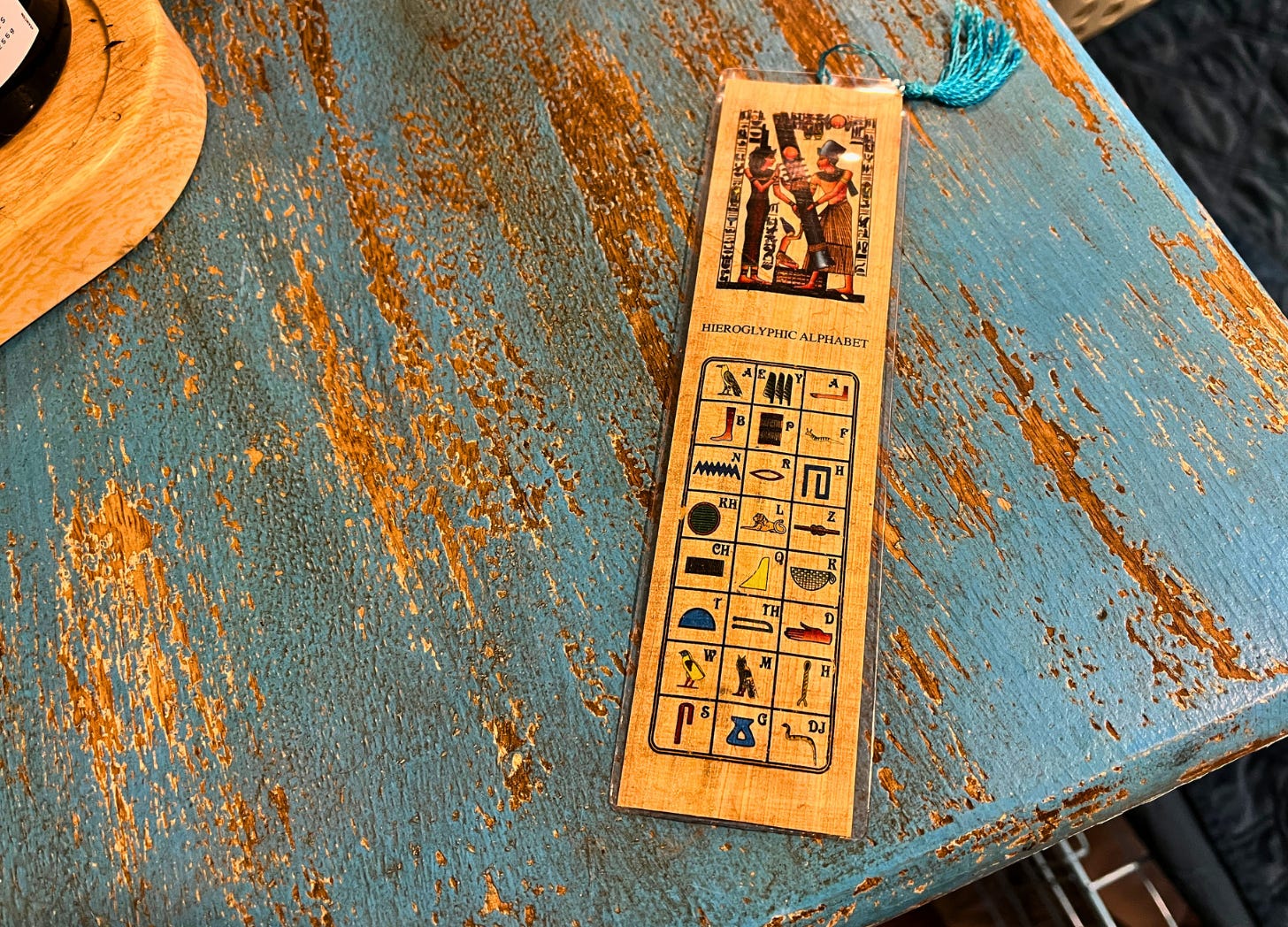
When I told him I'd worried, he smiled. It struck me that this is what the street culture of New York is built on: not grand relationships, but small daily ones, repeated so often we become our own kind of family for each other. He reached under the cart and handed me a bookmark he’d brought back from Egypt. He winked as he told me he only gave them to his favorite customers. I still have it.
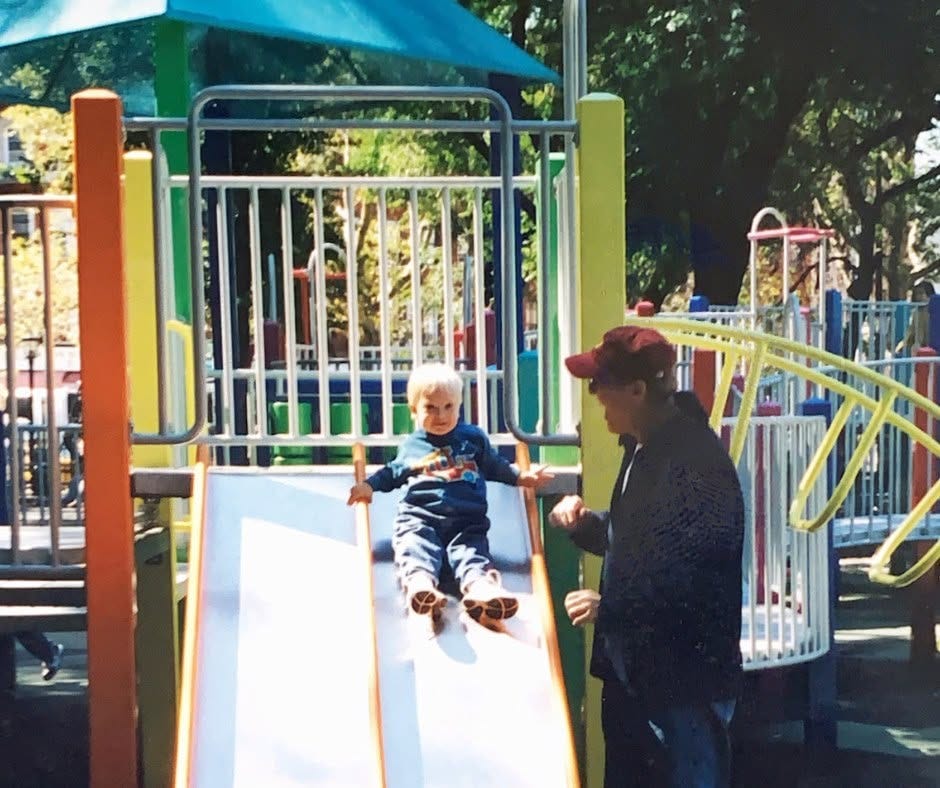
The weekend after 9/11, we explored Lower Manhattan. We did our normal park visits, watching the kids play and wondered what kind of world they were going to grow up in now. These adorable kids. So innocent. Running around screaming like usual, the parents quiet and whispering to each other.
After 9/11, there were no more “any other days.”
2,753 people died in the World Trade Center. So little of their physical remains were left behind.
I’ve read that only 300 bodies were recovered whole.
Only 300.
The smallest particles of them were carried on the wind, into the harbor, into us. The only way I can make sense of it all is to think about the sacrament of Communion. Those of us who lived, I believe, carry the victims in our bodies. We breathed the air, we walked the streets, our bodies became their final resting place.
We carry them into a future they never got to live.
What do we do with that? What are we asked to do in memory of them?
[i carry your heart with me(i carry it in]
ee cummings
i carry your heart with me(i carry it in
my heart)i am never without it(anywhere
i go you go,my dear;and whatever is done
by only me is your doing,my darling)
i fear
no fate(for you are my fate,my sweet)i want
no world(for beautiful you are my world,my true)
and it’s you are whatever a moon has always meant
and whatever a sun will always sing is you
here is the deepest secret nobody knows
(here is the root of the root and the bud of the bud
and the sky of the sky of a tree called life;which grows
higher than soul can hope or mind can hide)
and this is the wonder that’s keeping the stars apart
i carry your heart(i carry it in my heart)
Jen, this so beautifully captures The Day that was so ordinary to start with. Thank you. Living with loss. Living through loss. Living beyond loss.
Thank you Jen. Just thank you on a deep level